Your First Solo Camping Trip
Camping alone is one of the most rewarding things you can do — but the first night solo is mostly a head game. Here's how to make it calm, safe and genuinely enjoyable.
The hardest part of solo camping isn't the gear or the cooking — it's the 9pm wobble when the bush goes quiet and every twig snap sounds like something. The trick almost nobody tells you: book a campsite with at least a few other groups nearby for your first trip. You still get the solitude, but the background hum of other campers quietly tells your brain you're safe. After twenty-odd years of camping alone across Victoria, Tasmania and the high country, I've learned that solo camping isn't about bravery — it's about systems. Good systems let you relax; bad ones leave you solving problems in the dark with nobody to hand you the matches.
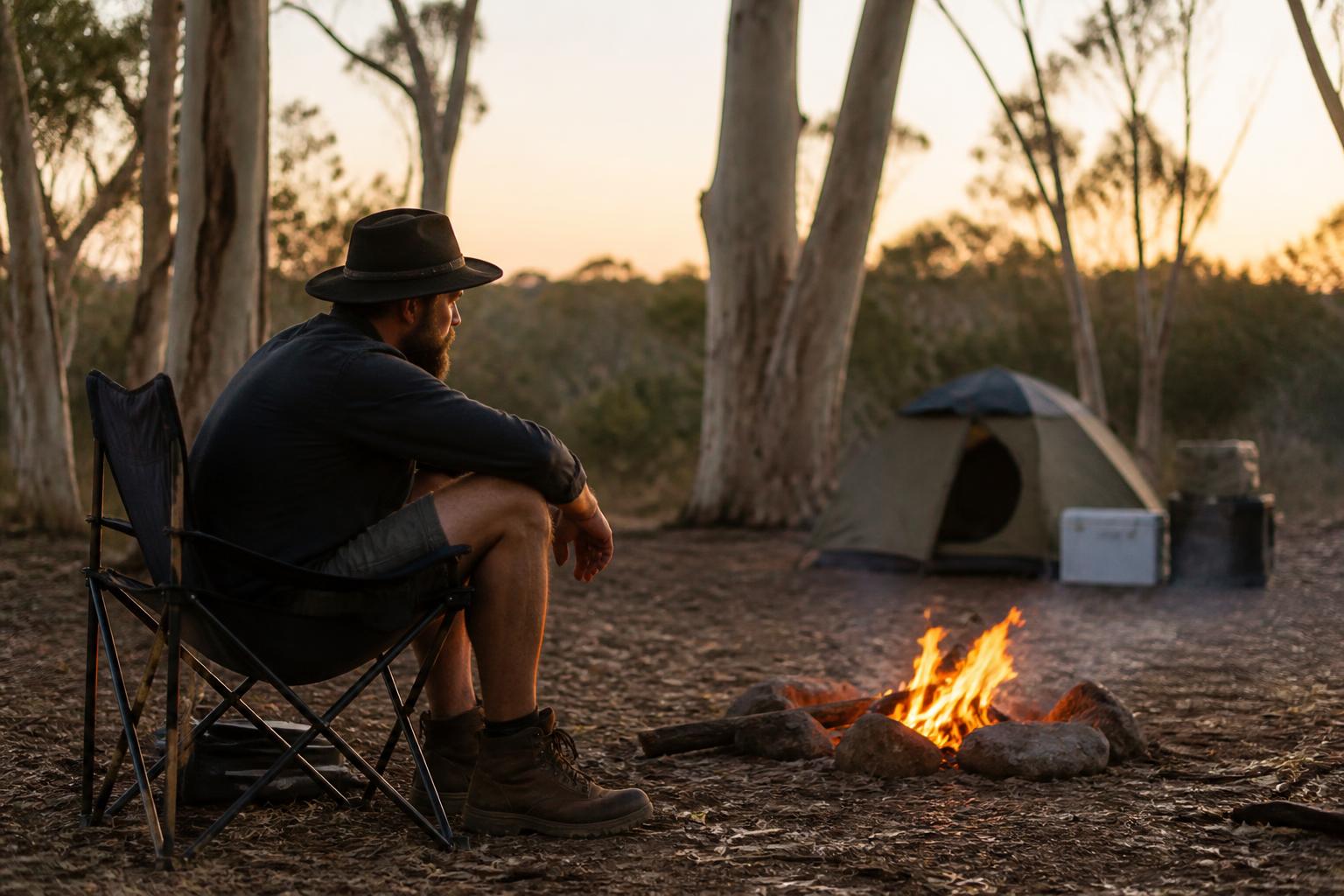
Pick a 'soft' first site
For trip one, choose a well-used national park or council campground that has a host or ranger, drinking water and a drop toilet. You want a place that's busy enough to feel safe but big enough to feel alone. Avoid free remote bush camps until you've done two or three solo nights. Here's the bit the brochures never mention: where you pitch within a campground matters as much as which campground you pick. Steer clear of the site right next to the toilet block (foot traffic and slamming doors all night) and the one at the very end of the loop (isolated, and the first place a curious roo or wandering camper wanders to). The sweet spot is a site two or three back from a friendly-looking family or grey-nomad caravan — close enough that you'd hear each other, far enough for privacy. Walk the loop once on foot before you commit; a site that looks flat from the car often has a slope you'll only notice at 2am when you've slid to the bottom of the tent. Another thing experienced solo campers do is arrive with a mental shortlist of three acceptable sites, not a fixation on one. Popular campgrounds fill up, and arriving to find your chosen spot taken can rattle a first-timer. Having backup options means you roll with it instead of spiralling. Check the prevailing wind direction too — in Australia it often swings from the west or north-west, so you want your tent door and fire downwind of where you'll sit, not upwind where smoke blows straight in. And look up: a beautiful site under a gnarly old gum is a widowmaker lottery. Dead branches ('gum bombers') drop without warning, and solo, there's nobody to go for help.
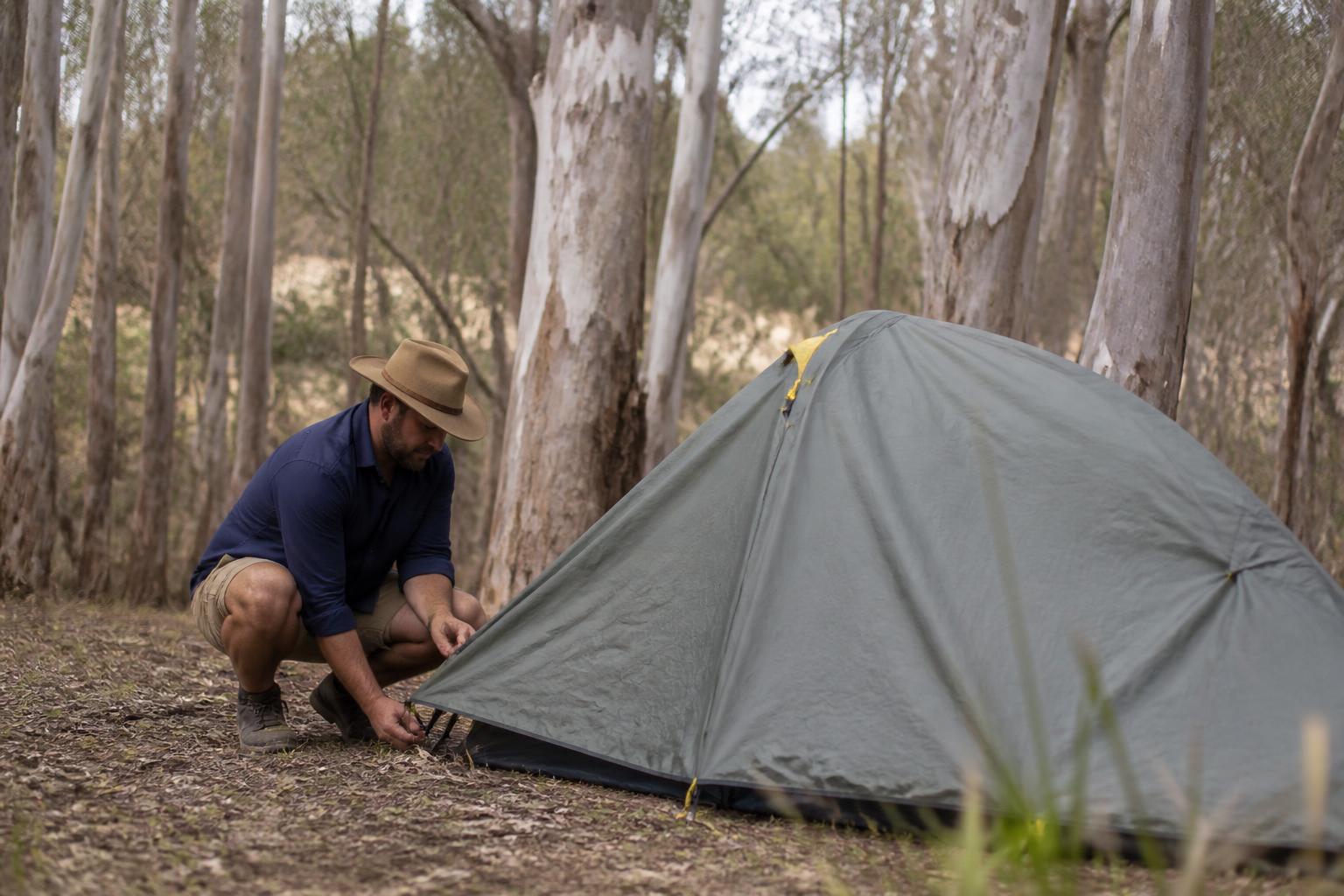
- Arrive 2+ hours before dark — never set up by torchlight alone
- Pick a flat spot with another group within earshot, not eyesight
- Park your car so the headlights face your tent if you need them
- Tell one person your exact site and your return time
- Avoid pitching directly under big old gums — dead limbs ('widowmakers') drop without warning
- Walk the loop on foot first; the best-looking drive-up site often has a hidden slope
- Have three backup sites in mind so a full campground doesn't rattle you
- Check wind direction before pitching — smoke in your face all night is miserable
Have a job for every hour
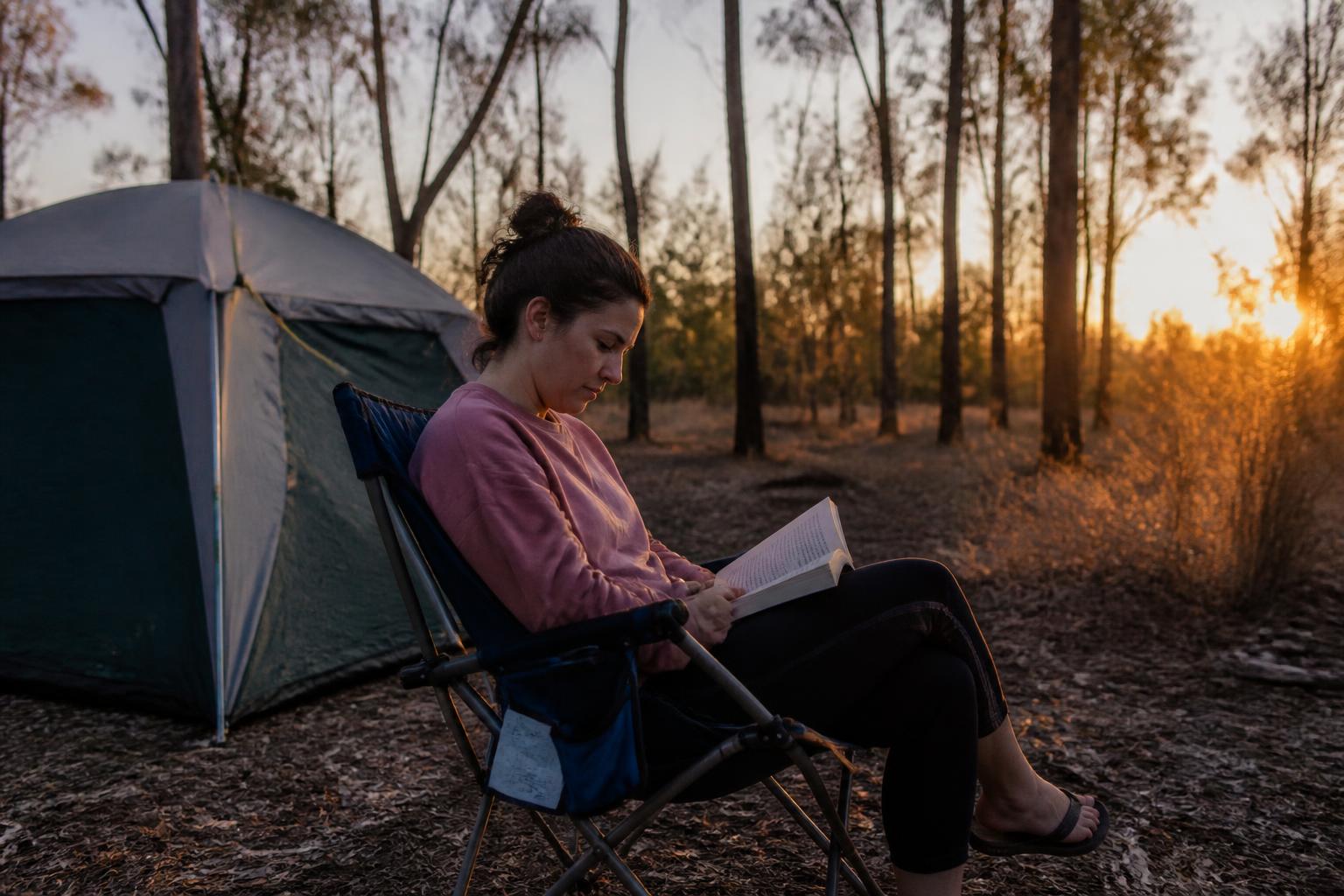
Boredom and overthinking are the real enemies of a first solo trip. The fix is a loose plan: a short afternoon walk, an early simple dinner, then a deliberate wind-down. Solo time stretches in a way that surprises everyone the first time — without anyone to talk to, an evening that flies by at home can feel endless in the bush. The seasoned-camper trick is to break the evening into small rituals: set up camp, then a walk, then a brew, then dinner, then dishes, then a fire, then a book. Each one is a tiny milestone that moves the night along and gives your mind something concrete to do. Bring a physical thing to occupy your hands too — a sketchbook, a paperback, even whittling a tent peg. Idle hands at dusk are exactly when the brain starts inventing things to worry about, so the goal is to stay gently busy right up until you're genuinely tired. The deeper insight is that solo camping gives you a kind of time you almost never get in normal life: unhurried, unmeasured, unstructured. Most people fill it with panic because they're not used to it. The ones who learn to savour it — to sit by the fire and actually watch the flames instead of checking a phone — are the ones who get hooked. Start a small journal habit if you're inclined; there's something about recording a solo trip in your own handwriting that makes it feel like an achievement, and re-reading those entries later is a quiet source of pride.
- Break the evening into small rituals — walk, brew, dinner, fire, book
- Download podcasts and maps offline before you lose signal
- Bring something for your hands: a book, sketchpad or simple craft
- Resist phone-checking; the whole point is unhurried, unstructured time
- Start a short camp journal — future you will thank present you
Cook small, cook early
Cooking for one is where solo camping gets easy. Skip the camp-kitchen fantasy. One pot, one burner, one bowl. Eat before dark so you're not fumbling with a stove in the cold, and so all food smells are packed away well before bedtime. The hard-won lesson is that ambition is the enemy of a good solo dinner — nobody's watching, so there's no prize for a three-course bush banquet, just more washing up in cold water and a longer wait to relax. Lean into food that's hot, filling and almost zero effort. A 'just add water' dehydrated meal, or pasta with a jar of sauce and a tin of tuna, beats anything fancy when you're tired and the light's fading. Plan the morning the night before too: a thermos filled with boiling water at dinner means coffee or oats the moment you wake, without crawling out into the cold to fire up a stove. And keep your kitchen at least a short walk from your tent — you want food smells away from where you sleep, especially anywhere there are possums, dingoes or goannas. The solo-camper secret to making simple food feel like a treat is to add one small luxury. A tiny block of decent chocolate after dinner, a flask of single malt for the fire, or a fresh lime squeezed into your water bottle makes the meal feel intentional rather than basic. It's psychological: a deliberate little pleasure signals to your brain that you're not just surviving out here, you're living.
- One-pot meals: pasta, couscous, instant noodles bulked with veg + tinned protein
- Pre-chop and bag ingredients at home to cut washing up
- A thermos of hot water means tea or oats with zero morning effort
- Cook and store food away from the tent — never eat or stash snacks where you sleep
- Add one small luxury — good chocolate, a dram of whisky — to make it feel like a treat
Build a simple safety net
Solo means no one to fix things for you, so redundancy matters more than for group trips. Two light sources, a charged power bank, a basic first-aid kit, and reception you've actually checked before you left phone signal. In remote spots, a personal locator beacon (PLB) is cheap to hire and the single best peace-of-mind item you can carry. The deeper point is that solo safety is mostly about decisions you make before you ever feel scared. Set a 'turn-around time' for any walk so you're never racing the dark. Tell one trusted person your exact site, your planned return and an agreed time you'll make contact — and crucially, agree what they should do if you don't. That single arrangement converts a worst-case scenario from 'no one knows where I am' into 'help knows roughly where to look'. Learn a few practical skills before you go too: how to treat a rolled ankle, how to start a fire in damp conditions, and how your stove behaves when it's cold. Competence is the quiet confidence that lets you actually enjoy being out there alone. There's also a mindset shift worth making: solo, you are the emergency coordinator, the medic and the mechanic. That sounds daunting, but in practice it means slowing down and thinking one step further ahead than you would in a group. Before you head off on a walk, ask yourself: if I twist an ankle right now, can I get back? If the answer's not obvious, adjust the plan. It's not paranoia — it's just good camping.
- Check phone reception at the actual site, not just the town
- Hire a PLB for remote areas — many libraries and ranger stations lend them
- Keep a torch, phone and shoes inside the tent within arm's reach
- Agree a check-in time and what your contact does if you miss it
- Set a turn-around time on walks so you never race the dark
- Think one step ahead: if I get hurt here, can I get back?
Sleep warm, sleep deep
Most first solo nights are ruined by cold, not fear. The ground steals more heat than the air, so your sleeping mat matters more than your bag's rating. Aim for an R-value of 3+ for three-season Aussie camping, and add a cheap closed-cell foam mat underneath in colder months. Eat a small fatty snack before bed — your body burns it through the night to stay warm. There's a sequence experienced campers follow that makes the difference between shivering and sleeping. Get changed into dry sleeping clothes before you cool down, not after — once you're cold, a sleeping bag only slows the chill, it doesn't reverse it. Do a few star jumps or a short brisk walk to warm your core, then climb in. Keep tomorrow's clothes in the bag with you so they're warm at dawn. Crack a vent at each end of the tent even on a cold night: Australian nights swing humid, and a sealed tent will have you waking to a fine mist of your own condensation dripping off the inner. A beanie and dry socks do more for warmth than a heavier bag ever will. The solo-specific wrinkle is that you don't have a warm body next to you sharing heat, so your setup needs to be slightly more conservative than a couple's. If you're on the fence between a 0°C and a -5°C bag, go lower. The weight penalty is small; the sleep penalty of being cold alone is large. And position your sleeping mat carefully — solo campers tend to shift around more without a partner to unconsciously anchor them, so a mat that slides on the tent floor is a nightly frustration. A strip of gaffer tape on the underside of the mat stops it wandering.
- Mat R-value 3+ beats an expensive bag on cold ground
- Vent the tent slightly — a sealed tent soaks you in condensation
- A Nalgene of boiled water in the foot of your bag is a game changer
- Wear a dry beanie to bed; you lose serious heat through your head
- Change into dry sleep clothes and warm your core before getting in
- Go one bag rating lower than you'd share with a partner — no shared heat
- Gaffer tape under your mat stops it sliding on the tent floor
Win the head game
The fear of solo camping is almost always worse in anticipation than in reality. Give your mind facts instead of imagination: learn the local wildlife so noises have names, and rehearse what you'd actually do in the rare scenarios that worry you. Once you have a plan, the brain stops spinning — and by the second night, the quiet becomes the best part. The honest truth most solo campers only admit later is that the fear peaks at a very specific moment — that first hour after dark when the bush goes silent and your mind has nothing to do but listen. It almost always fades. Knowing it's coming, and that it's normal and temporary, robs it of most of its power. Have a small plan for the three things that actually worry beginners — bad weather, a minor injury, and a flat phone — then deliberately let them go. Most night noises in the Aussie bush are possums crashing through branches, wallabies thumping past, or bush rats rustling in the leaf litter; learning that in advance turns 'what was THAT' into 'oh, just a possum'. By morning you'll have done the thing you were nervous about, and the second night feels like a completely different experience. Here's a technique that works for almost everyone: when the nerves hit, name three things you can see, three you can hear, and three you can feel. It's a grounding trick used by paramedics and pilots, and it snaps your brain out of spiral mode fast. Then do something with your hands — make tea, adjust the fire, organise your pack. Action beats anxiety every time. And remember: the fear is temporary, but the confidence you earn by sitting through it is permanent.
- Name the noises — possums and wallabies cause 90% of night sounds
- Have a simple plan for weather, injury and a flat phone, then let it go
- Keep busy at dusk; idle time is when the nerves creep in
- Expect the fear to peak in the first dark hour — it always passes
- Use the 3-3-3 grounding trick: name three sights, sounds, feelings
- Action beats anxiety — make tea, tend the fire, organise your pack
The morning after: why day two changes everything
If the first night of solo camping is about surviving the nerves, the first morning is about realising you've done something most people never will. There's a specific quality to a solo dawn that group campers miss entirely: the silence before anyone else wakes, the light coming through the tent in a colour you don't see at home, the satisfaction of making your own coffee exactly how you like it with nobody rushing you. Lean into it. Wake early, brew slow, and sit with the view. This is the payoff. The second night is almost always easier — your tent feels like a known space, the sounds are familiar, and your body has adjusted to the rhythm. The real transformation happens between morning one and morning two. That's when you stop being a person who 'tried' solo camping and become someone who camps solo. Use the first morning to fix anything that annoyed you overnight: adjust the guy ropes, reposition the mat, move the kitchen if smoke drifted wrong. Small tweaks now prevent the same irritation on night two. And plan a gentle day — a short walk, some reading, maybe a swim if there's water. The mistake first-timers make is to pack the second day with activity to avoid the quiet, when the quiet is exactly what you came for.
- Wake early on day one and savour the solo dawn — it's the real payoff
- Fix overnight annoyances in the morning: guy ropes, mat position, kitchen spot
- Plan a gentle day two — the quiet is the point, not a problem to fill
- Night two is almost always easier; trust the process
When things go slightly wrong
Something minor will go wrong on your first solo trip — a guy rope snaps, a stove jet clogs, a cloudburst catches you mid-dinner. The difference between a seasoned solo camper and a stressed one isn't that fewer things go wrong; it's that they've already mentally rehearsed the fixes. Carry a short length of spare cord, a few cable ties, a small roll of gaffer tape, and a multi-tool. Those four items will solve 80% of the small mechanical problems that happen at camp. For the bigger stuff — a turned ankle on a walk, a sudden storm, a vehicle that won't start — the solo-camper habit is to pause before reacting. A two-minute sit-down to actually assess the situation almost always produces a better plan than immediate panic. In twenty years of solo trips, I've had a tent pole snap in a storm, a car battery die in a remote car park, and a stove fail on a below-zero morning. Every one felt like a crisis for about five minutes, then became a story I tell around other fires. The confidence solo camping builds isn't that nothing goes wrong — it's that you can handle it when it does. And that confidence bleeds into the rest of your life in ways that are hard to explain until you've felt it.
- Spare cord, cable ties, gaffer tape and a multi-tool solve most small problems
- Pause for two minutes before reacting to a crisis — better plans follow calm
- Every solo camper has stories of things going wrong; they're badges, not failures
- The confidence you build out here carries into everyday life
Little things that make a big difference
Set your tent door facing east — waking to morning sun on a solo trip lifts the mood more than you'd expect and warms the tent fast.
Leave a quiet radio or podcast playing low for the first hour after dark. It masks the silence while your ears adjust to bush sounds.
Most 'scary' night noises are possums, bush rats or wallabies. Knowing the local critters in advance removes 90% of the fear.
Keep your campsite boring to wildlife: all food, scraps and even toothpaste in the car or a sealed box, never the tent.
Practise pitching your tent once in the backyard. Doing it solo for the very first time at a campsite, against the clock, is needless stress.
Sleep with tomorrow's clothes inside your sleeping bag. Dressing in warm clothes on a cold solo morning is a small luxury.
Drop a pin on your car and tent in an offline maps app before you lose signal — finding your way back from a dusk walk is reassuring.
Arrive, then sit for ten minutes before touching the gear. Reading the ground, wind and shade first saves re-pitching in the wrong spot.
Tell a friend you'll text at a set time each night. That single check-in removes most of the 'what if something happens' worry.
Pack a small 'reward' snack you only eat on night two. Having something to look forward to makes the second solo evening feel like a milestone, not a chore.
Beyond the basic checklist
Power bank (10,000mAh+)
Your phone is your map, torch and emergency line — keep it alive.
Second light source
A headlamp plus a small lantern means one failing isn't a crisis.
Earplugs
Ironically, they help nervous first-timers sleep through harmless bush noise.
A proper book or downloaded media
Fills the long solo evening and quiets the overthinking.
PLB (hired)
The one item that makes remote solo camping genuinely safe.
Camp chair
Sounds minor — but a comfortable seat turns a long evening into a good one.
Closed-cell foam mat
Cheap insurance under your inflatable mat for cold-ground nights.
Offline maps app
Navigate back to camp and find help with no phone signal.
Spare cord + cable ties + gaffer tape
The trio that fixes 80% of small camp gear failures.
Small multi-tool
Saves a trip home for a snapped guy rope or stove jet.
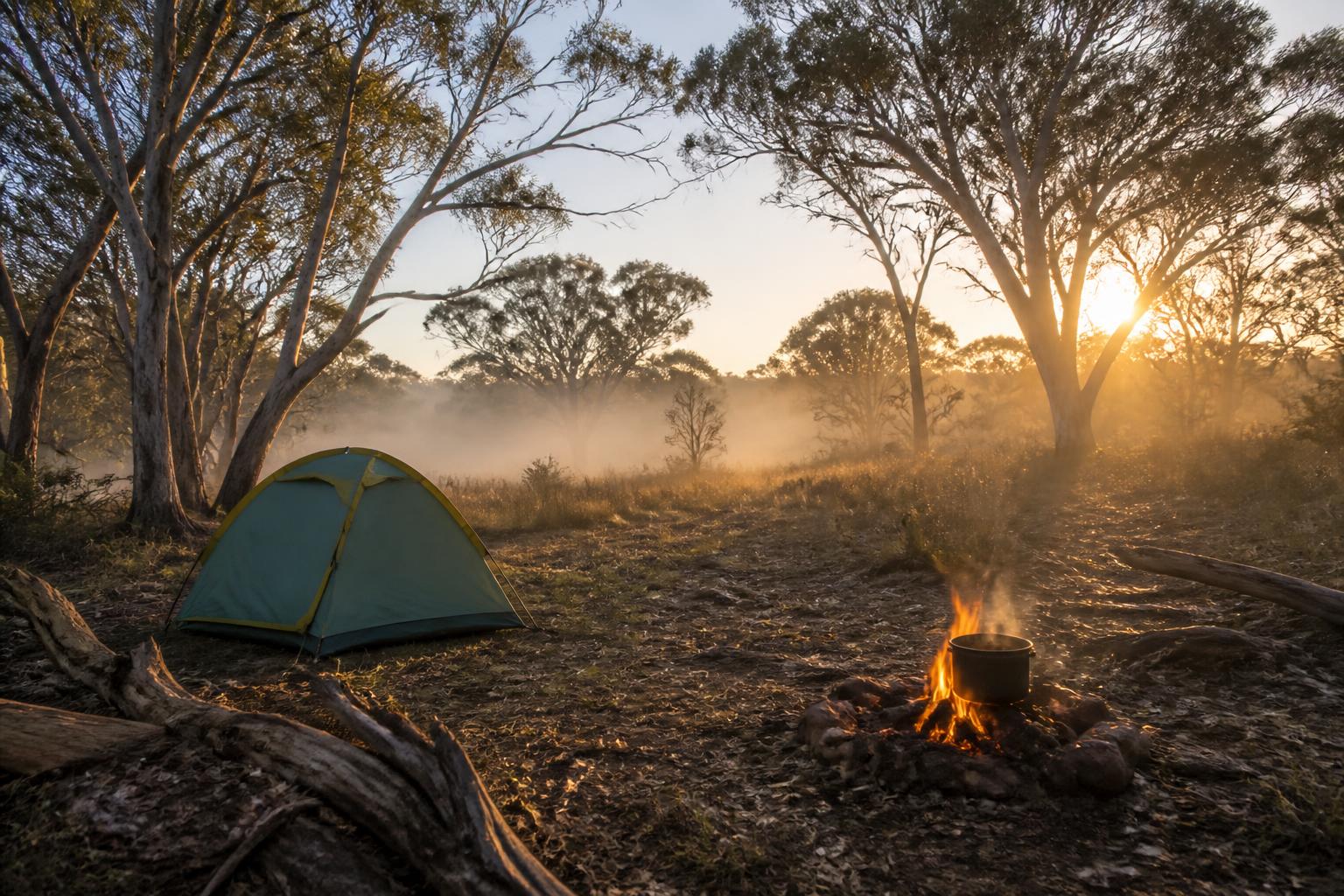
Wake before everyone else. A solo sunrise with a hot brew is the best part of the trip.
What catches people out
- Underestimating how long jobs take alone — setup, cooking and packing all take roughly double with no second pair of hands.
- Phone battery anxiety. One cold night can flatten a phone fast; a power bank turns your only safety device back on.
- Going too remote too soon. Confidence is built in steps — your nervous system needs an easy win first.
- Forgetting that being cold ruins everything. A good sleeping mat (not just the bag) is what keeps you warm off the ground.
- Relying on a single torch. A dead headlamp at 3am with no backup turns a minor moment into a stressful one.
- Skipping a proper dinner because cooking for one feels like effort. A warm meal keeps you warm and steadies the nerves.
- Packing the schedule too full on day two. The quiet is the whole point of solo camping — don't run from it.
- Ignoring the small fix on morning one. A nagging problem left unsolved becomes a bigger problem on night two.
Ready to turn this into a plan?
Build a packing list tailored to your trip and step through the rest in the right order.