Parents and two children setting up a large family tent in a grassy campground
Family Camping

Camping With Kids For The First Time

A great family camp isn't about perfect gear — it's about managing energy, boredom and bedtime. Get those right and the kids will beg to go back.

Every experienced camping parent learns the same lesson the hard way: the trip is won or lost at bedtime. Kids who are warm, fed and worn out sleep. Kids who are cold or wired turn 2am into a nightmare for the whole campground. So we plan the entire day backwards from a good night's sleep — and we never, ever camp without a bag of glow sticks.
— Hard-won advice from the Easy Camping crew
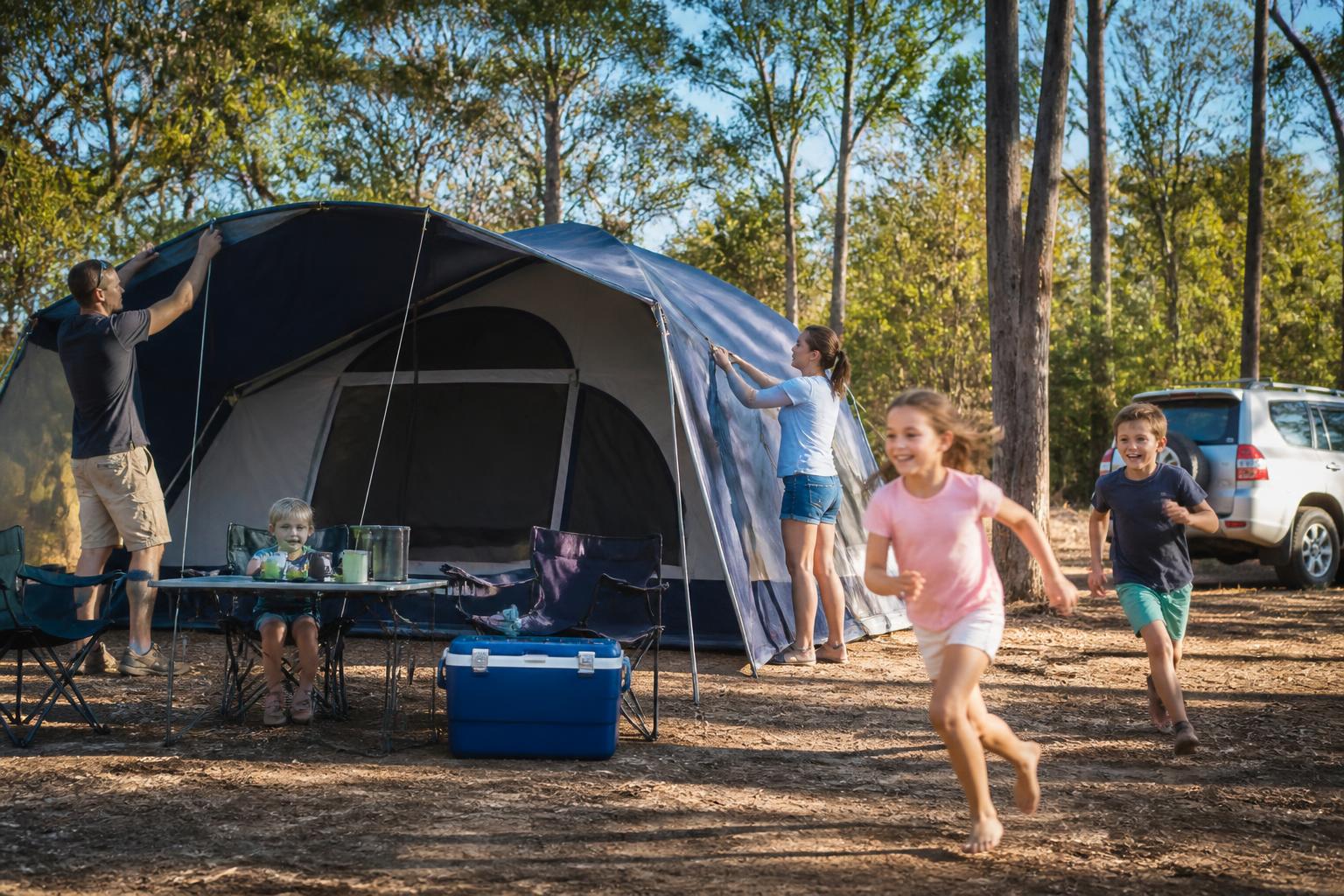
A family setting up camp together at a sunny bush campground
Jobs for everyone — the setup goes faster and the kids feel part of it.
Step 1

Choose a forgiving campground

For a first family trip, comfort beats wilderness every time. Pick a site with flushing toilets or clean amenities, drinking water, some shade, and ideally a playground, beach or creek. Powered sites are worth it early on — they let you run a light and charge devices for the inevitable rainy-hour movie. The thing experienced camping families know is that your first trip is really a test of the logistics, not the location — so make the logistics easy. Choose somewhere under two hours from home so a genuinely bad night isn't a four-hour ordeal to escape, and so you can bail without it feeling like failure. Book for two nights, not one: the first day is chaos and setup, and it's the second morning — slow breakfast, kids exploring, nowhere to be — that actually sells them on camping. Read recent reviews for the words 'family friendly' and 'shady', and avoid school holidays for your very first go if you can; a packed, rowdy campground is far more stressful than a quiet midweek one when you're still finding your feet.

  • Look for fenced or low-traffic sites away from roads and water edges
  • Amenities block within easy walking distance saves countless trips
  • A nearby playground or swimming spot does your entertainment for you
  • Book a slightly bigger site — kids need room to roam at camp
  • Stay under two hours from home and book two nights, not one
Step 2

Run the day on energy, not a schedule

The winning rhythm is: active mornings, quiet afternoons, big play before dinner, then a calm wind-down. Tire them out with purpose during daylight so they crash at night. Build in a deliberate slow hour after lunch — even non-nappers benefit from books or quiet play in the heat of the day. What surprises most first-time camping parents is how little structured 'entertainment' kids actually need outdoors — a stick, a patch of dirt, a creek and a torch will hold them for hours in a way no playground at home ever does. Your job is mostly to set the conditions and then step back. Resist the urge to plan a packed itinerary of drives and attractions; the magic of camping for kids is unstructured freedom and a bit of supervised risk. The one piece of structure worth keeping is the wind-down. Start it earlier than you think — as the light drops, shift from running-around games to a fire, a story, hot milk. Kids who go from full-tilt straight to 'bed' get a second wind and fight sleep; a deliberate 30-minute gear-down is what turns an exhausted child into a sleeping one.
Step 3

Feed them simply and often

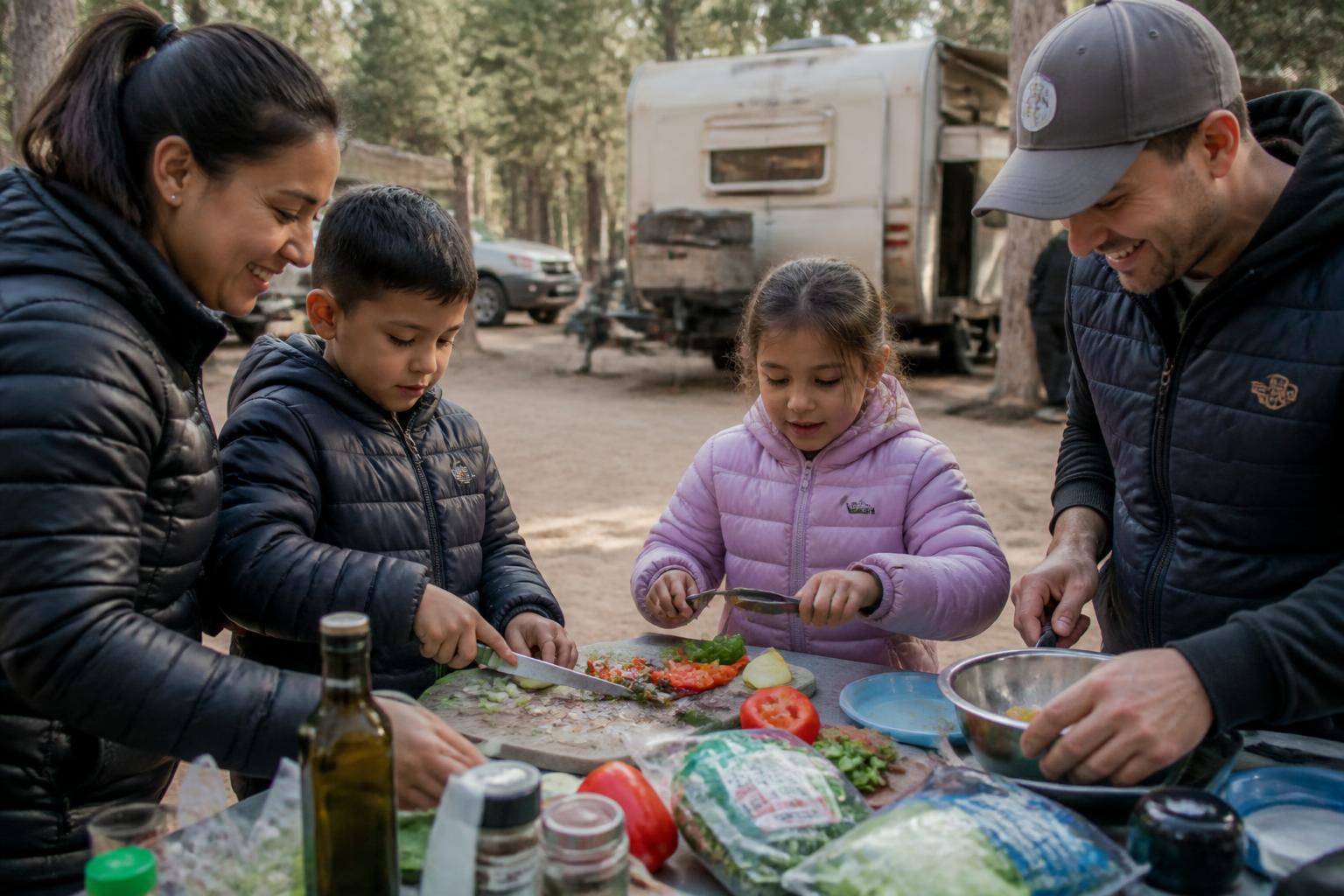
Hungry kids melt down fast and camp cooking is slow. Pack way more snacks than feels reasonable, and make dinners that kids already love — this is not the trip for culinary experiments. Get them involved: toasting marshmallows, stirring the pot or building their own wrap turns food into entertainment. The seasoned-parent move is to do as much cooking as possible at home. A pre-made bolognese, curry or pasta bake frozen flat in a bag thaws on the drive, doubles as esky ice, and means dinner on the hard first night is just 'reheat and serve' instead of wrangling a stove with three hungry kids underfoot. Plan for the gap, too: the danger zone is the hour between arriving and dinner, when everyone's tired, hungry and the camp isn't set up yet. Have a snack box ready in the car for the moment you pull in. And lower the bar on nutrition for a few days — a camp where the kids eat too many chips but go home grinning beats a 'balanced' one that ended in tears over an unfamiliar dinner.

  • Pre-cook one freezer meal (bolognese, curry) for the tired first night
  • Snack box the kids can self-serve cuts constant 'I'm hungry' requests
  • Dedicated kids' water bottles they're responsible for
  • Keep an arrival snack in the car for the chaotic pre-dinner hour
Step 4

Win bedtime

Cold kids don't sleep, and tents get cold fast after dark. Layer them up before they cool down, give every child their own torch or glow stick, and keep the home bedtime routine — story, cuddle, lights out. A familiar comfort toy and a warm sleeping setup do more than any gadget. The detail that catches everyone out is that the cold comes up from the ground, not in from the air, so the single most important thing under a child is insulation — a proper sleeping mat, or even a foam mat plus a picnic rug, matters more than the thickness of the sleeping bag on top. Dress them in thermals or trackies and a beanie before they're cold, because a chilled child is almost impossible to warm back up in a tent. Keep the routine as close to home as you can: same order, same story, same toy — familiarity is what tells a small body it's safe to switch off in a strange place. And accept that the first night is often rough for everyone; kids are wired with excitement and every noise is new. It almost always settles by night two, so don't judge the whole trip on the first bedtime.

  • Thermals or trackies + beanie for sleeping, even in summer
  • A sleeping mat under every child — the cold ground is the real chill
  • Glow sticks in the tent double as nightlights and toys
  • Keep the home routine identical — same order, story and comfort toy
Step 5

Camp-proof the little ones

Toddlers and preschoolers turn any campsite into a hazard hunt: fire pits, tent pegs, eskies of cold water and the car park. Set invisible boundaries early. A pop-up playpen or a marked-off rug becomes 'home base', and a high-vis or bright-coloured shirt makes a wandering toddler easy to spot across a busy campground. The fire is the one to drill hardest — establish a no-go circle a good arm's length wider than the pit and enforce it from the very first flame, before anyone's tempted to test it, because consistency on day one is what makes it stick all weekend. The sneaky hazards are the ones at toddler height: guy ropes and tent pegs that catch shins and trip running kids (slip a tennis ball over each peg and tie strips of bright tape on the ropes so everyone sees them), and the esky of icy water that a curious little one can tip or fall into. Think about the perimeter too — note where the road and any water are the moment you arrive, and orient your setup so the natural 'play side' faces away from both. A few minutes of camp-proofing when you pull in saves a weekend of frayed nerves.

  • Cover tent-peg points with tennis balls — they're shin and trip hazards
  • Establish a 'no-go' fire circle rule before you light anything
  • Dress little kids in one bright colour so they're visible at a glance
  • Pack a cheap clip-on fan for hot afternoons in the tent
  • Note where the road and water are on arrival, and set up facing away
Step 6

Get the kids packing themselves

Children look after gear they packed themselves, and it builds the independence that makes camp fun rather than a parent-led slog. Give each child their own small bag and a simple picture or written checklist. They'll know where their own torch, jumper and water bottle live — which means far fewer 'Mum, where's my…' questions all weekend. Take it a step further and give each kid a real, age-appropriate job at camp too: collecting kindling, pumping water, laying out the sleeping mats, helping pitch the tent. Ownership is the thing that flips a child from whinging passenger to proud crew member, and the pride of 'I set up my own bed' carries a surprising amount of weight at bedtime. Keep their kit simple and self-contained so they can actually manage it — one bag, clothes in daily bundles, torch clipped to the top. The goal isn't a perfectly packed bag; it's a child who feels capable and involved, because that feeling is exactly what makes them beg to come back.

  • One labelled bag per child for their clothes and torch
  • A simple checklist they tick off builds ownership
  • Let them choose two comfort items — within size limits
  • Give each child one real camp job — kindling, water, laying out beds
Insider Tips You Won't Find In A Search

Little things that make a big difference

1

Give each child a head torch the moment you arrive. It instantly becomes their favourite possession and stops the 'I can't see' panic at night.

2

Pack a separate 'wet bag' for muddy shoes and soaked clothes — kids will find every puddle and creek, guaranteed.

3

A roll of cheap glow sticks is the best $5 you'll spend: bedtime nightlights, after-dark games, and tent markers so kids find their way back from the toilet.

4

Set up a 'kid zone' — a picnic rug with toys, cards and craft. Having a base keeps little ones occupied while you set up or cook.

5

Bring an old shower curtain or tarp for the tent floor under sleeping mats. It traps the ground cold and dirt and makes pack-up far cleaner.

6

Assign each child one camp job (collecting kindling, pumping water). Ownership turns whining into pride.

7

Freeze water bottles and use them as esky ice — they keep food cold for days, then become drinking water as they melt.

8

Bring a roll of painter's tape. It labels cups so kids don't lose them, patches tents and tames a hundred small camp problems.

9

Set up the tent and beds first, before play or food. A ready bed means an exhausted, melting-down child can be put down in seconds.

10

Camp near the amenities block, not far from it. At 11pm, a tiny bladder and a dark walk is the thing that breaks a parent's will — a two-minute stroll saves the trip.

The Extras Worth Packing

Beyond the basic checklist

Head torch per child

Independence after dark and far fewer night-time meltdowns.

Glow sticks

Nightlight, toy and toilet-trip marker all in one.

Wet bag / spare clothes

Kids find every puddle — dry clothes save the day.

Picnic rug + toys

Creates a contained 'kid zone' while you work.

Extra snacks

Pack double what you think — hunger causes most meltdowns.

Comfort toy & familiar bedtime book

Keeps the home routine intact for easier sleep.

Clip-on tent fan

Turns a stuffy hot afternoon nap into an actual nap.

Painter's tape

Labels cups, patches tents and fixes a hundred small camp problems.
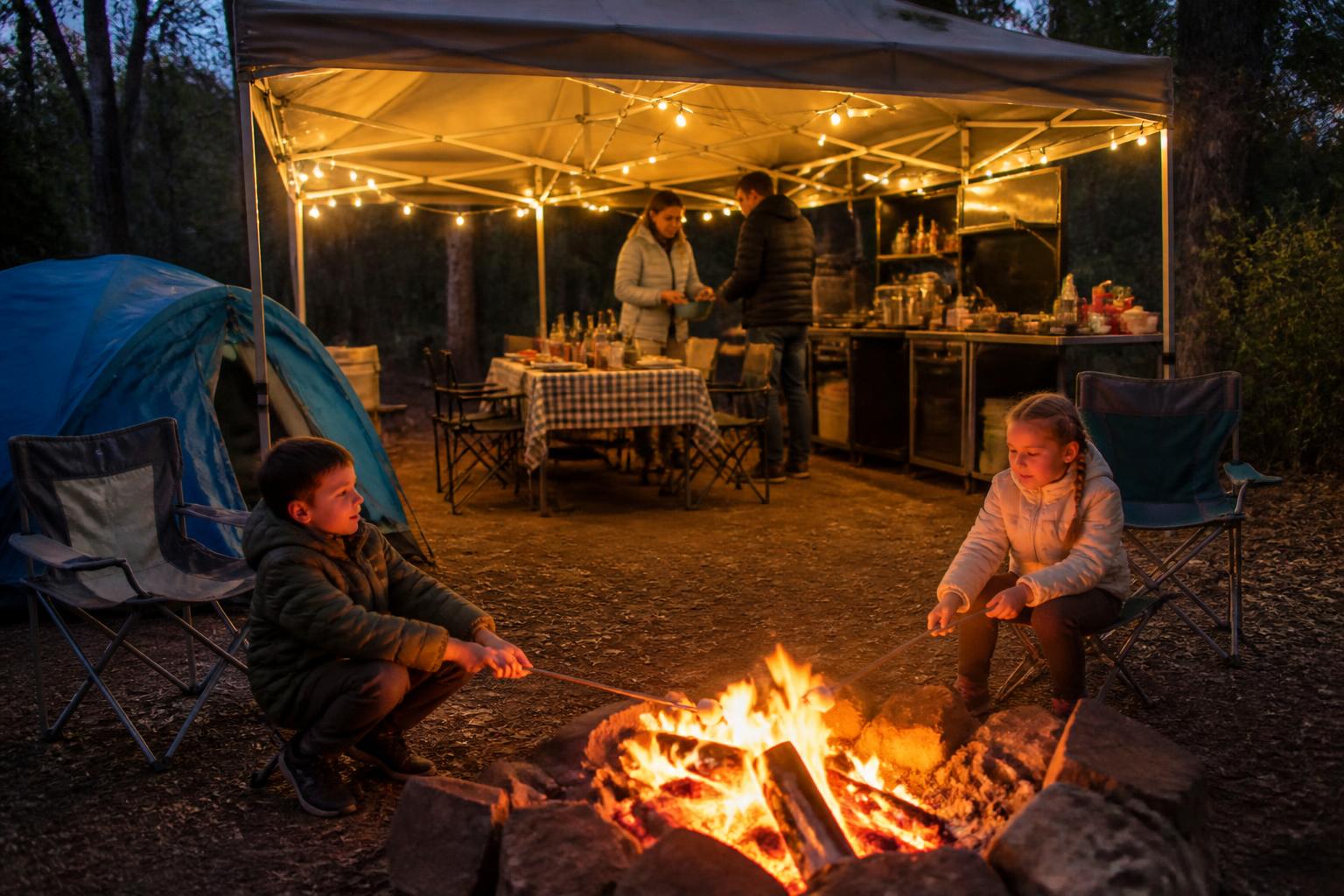
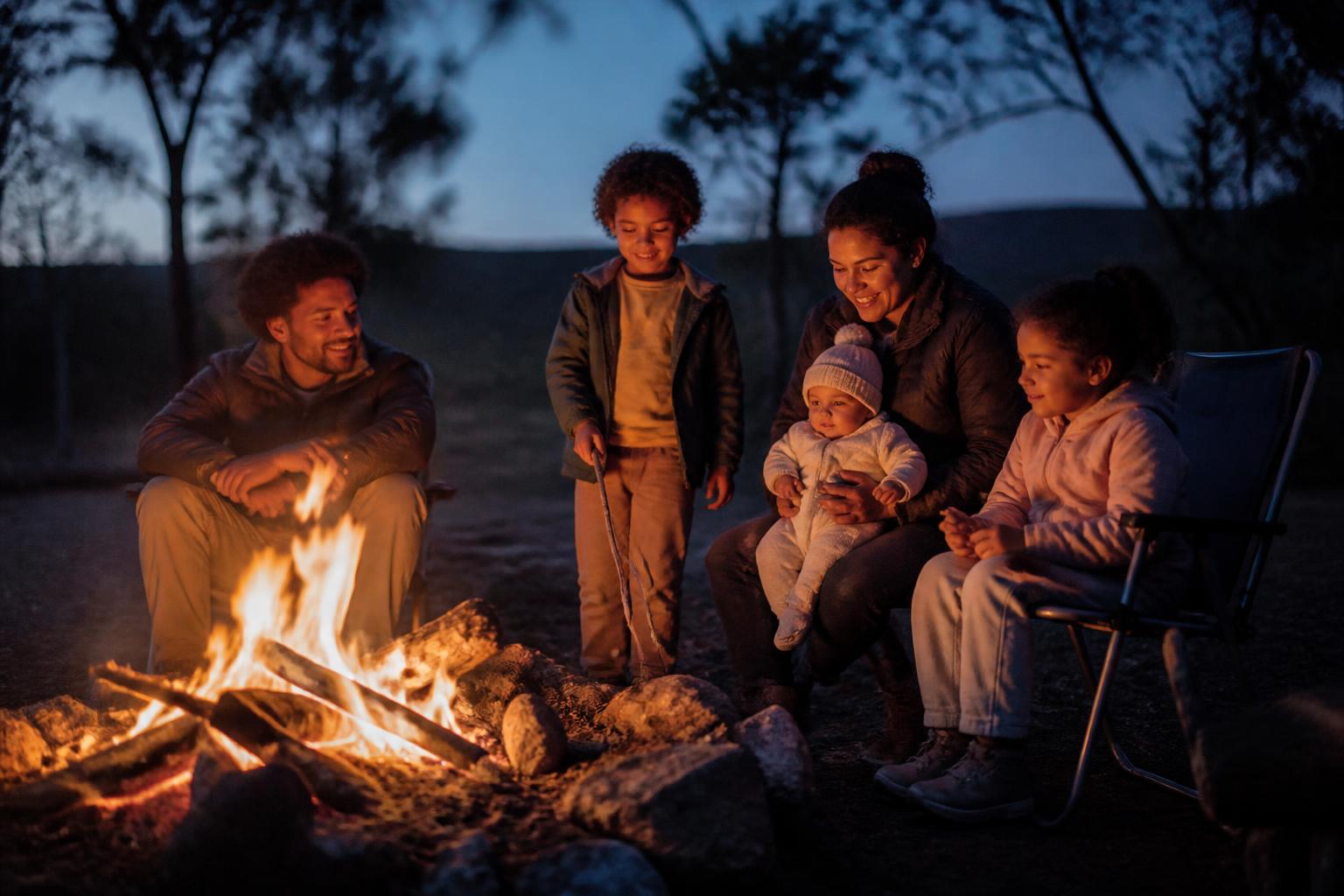
Kids toasting marshmallows under fairy lights at the family camp kitchen

The campfire after dark is where the trip becomes a memory the kids keep.

What catches people out

  • Letting kids get cold before bed — once a child is chilled it's very hard to warm them up in a tent. Layer early.
  • Over-scheduling. Kids love the simple stuff — sticks, dirt, water. You don't need a packed itinerary.
  • Forgetting wet-weather entertainment. One downpour with bored kids and no cards, books or movie is a long afternoon.
  • Sites near water or roads. With several kids, a site with clear boundaries massively reduces stress.
  • Underestimating the sun. Kids burn fast at camp — hats, shade and reapplied sunscreen prevent a miserable, sleepless night.
  • Relying on phone screens for downtime. Patchy signal and flat batteries leave you stranded; pack cards, books and craft instead.

Ready to turn this into a plan?

Build a packing list tailored to your trip and step through the rest in the right order.