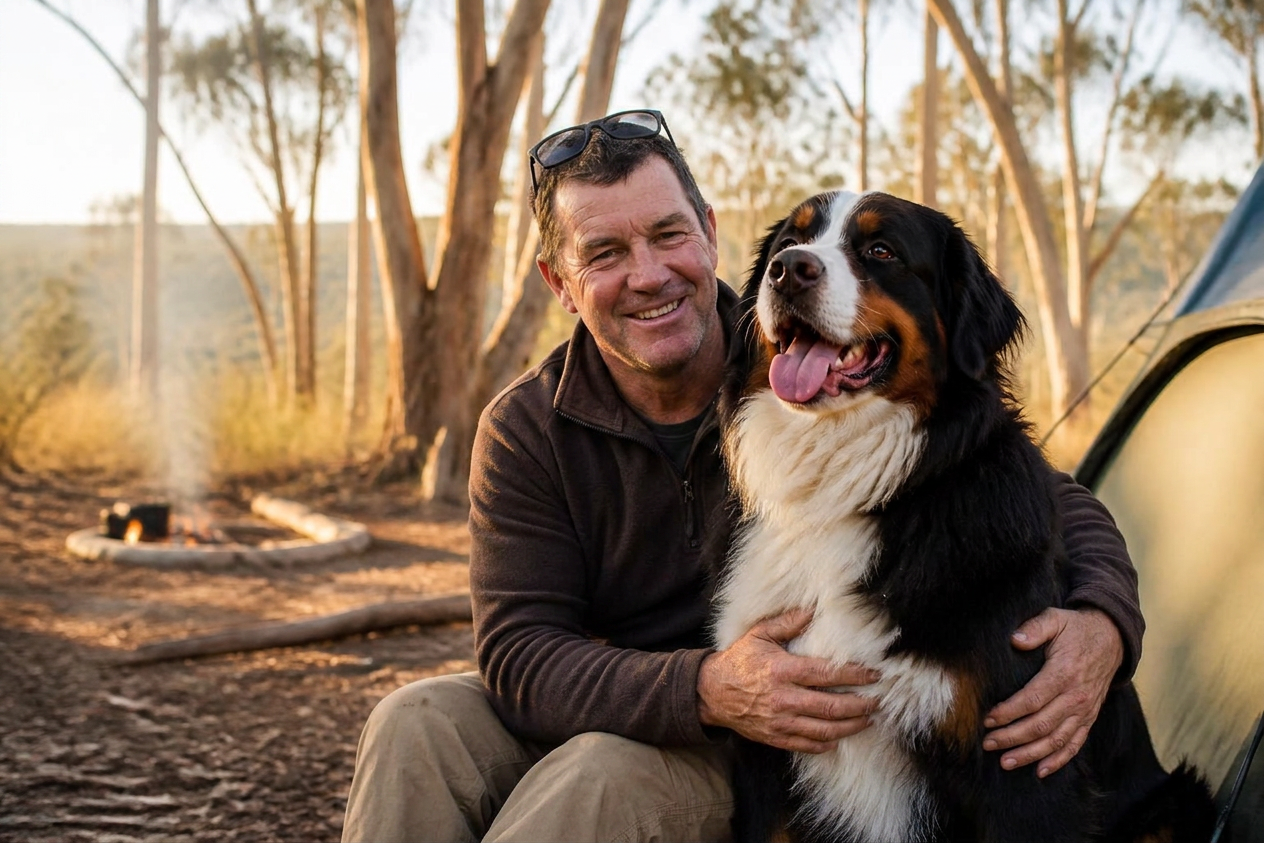
A dog sitting beside a tent at a campsite, looking content
Camping With Dogs

Taking Your Dog Camping

Dogs make camping better — but only if you plan for them. The two things that ruin dog camps are barking at night and the wrong campsite. Both are easy to avoid once you know.

The biggest mistake people make is assuming any campground takes dogs — and most national parks in Australia don't. Before anything else, confirm the site is dog-friendly. Then plan for the second-biggest issue: a dog that barks all night because it's never slept outside before. A worn-out dog with a familiar bed inside the tent is a quiet dog.
— Hard-won advice from the Easy Camping crew
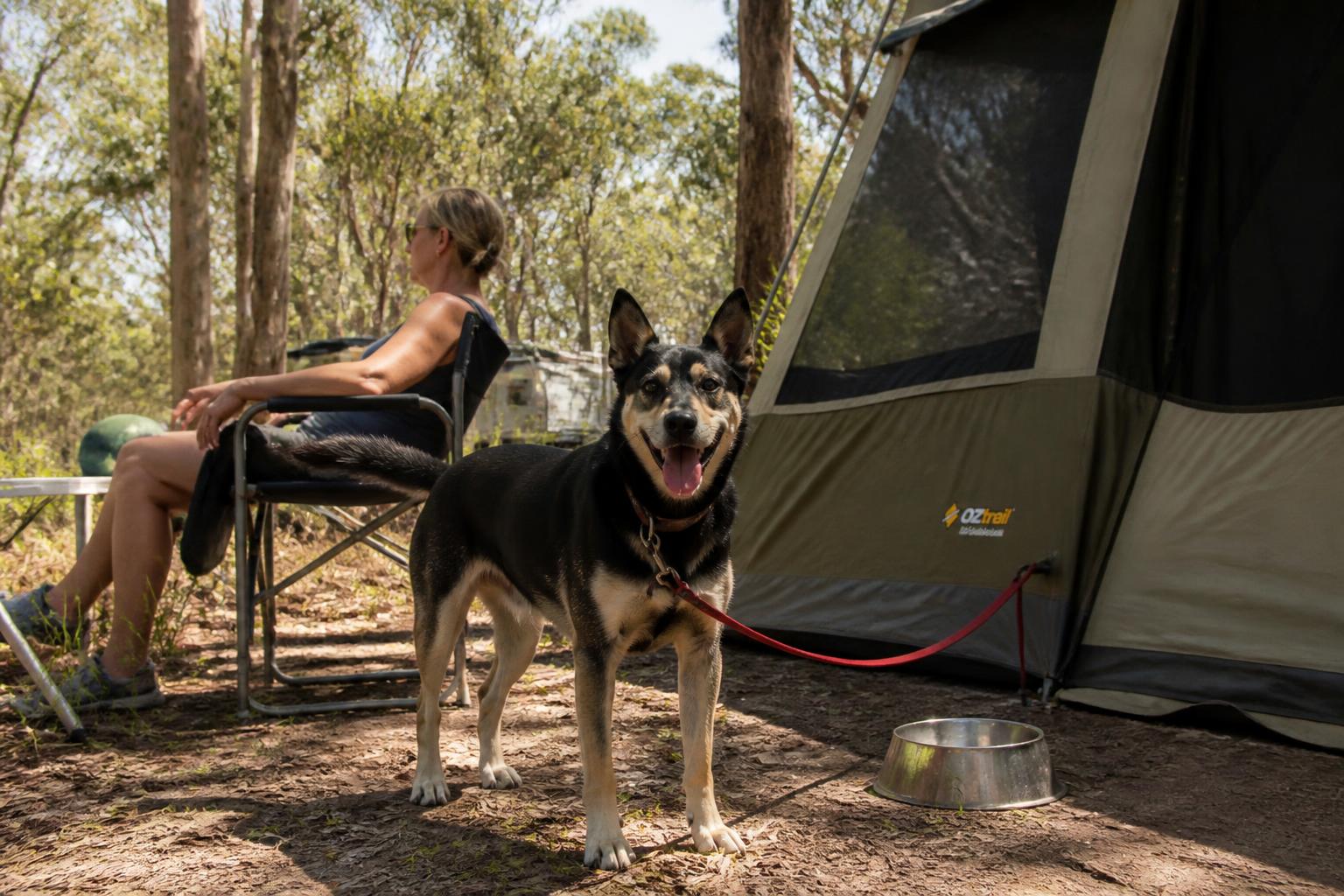
A happy dog on a lead beside the tent at a bush campsite
A shaded spot, water within reach and a long lead — that's a settled dog.
Step 1

Find a genuinely dog-friendly site

This is non-negotiable: most NSW, VIC and QLD national parks ban dogs entirely, even on leads. Aim for state forests, council reserves, privately-run campgrounds and many free camps that allow dogs. Always check the specific site's rules before you book — 'pet friendly' regions still have plenty of no-dog spots. The trap that catches people out is assuming a whole area is dog-friendly because one campground in it is; rules are set site by site, and the penalties in national parks are real, on-the-spot fines, not just a frown from a ranger. Ring the land manager or the campground directly rather than trusting a third-party listing, because online directories are often out of date. While you've got them on the phone, ask the questions that actually matter for dogs: is there shade, is there fresh water nearby, are dogs allowed off the immediate campsite or only on it, and are there 1080 fox baits laid in the area — baiting is common in state forests and farmland, and it's lethal to dogs. A few minutes of checking before you drive saves a wasted trip or, far worse, a tragedy.

  • State forests and private campgrounds are your best bet
  • Most national parks ban dogs — check before you drive
  • Look for sites with shade and water access for hot days
  • Confirm leash rules — many sites require dogs leashed at all times
  • Ask specifically about 1080 fox baiting — it's lethal to dogs
Step 2

Tire them out before dark

A dog with pent-up energy will bark, dig and pester. The fix is exercise: a solid walk or play session in the late afternoon means a settled, sleepy dog at camp. Bring familiar toys and a chew to occupy them while you cook and set up. There's a sequence that works far better than just 'tire them out', though — exercise them, then feed them, then settle them, in that order, mirroring the wind-down they'd get at home. A dog that's run, eaten and had a chew is biologically primed to sleep; a dog that's been cooped in the car all day and then expected to lie quietly by a fire it's never seen is set up to fail. Remember a new campsite is sensory overload for a dog: unfamiliar smells, other dogs, wildlife, woodsmoke and strange noises all crank up their alertness. Give them time to investigate the site on lead when you first arrive so the novelty wears off, rather than expecting instant calm. The afternoon walk does double duty — it burns energy and lets them map the new territory so the dark hours feel familiar instead of threatening.

  • Run, then feed, then settle — mirror the home wind-down routine
  • Walk the site on lead on arrival so the novelty wears off
  • Bring a long-lasting chew to occupy them while you set up
Step 3

Manage heat and water carefully

Australian campsites get hot, and dogs overheat fast — especially in a tent or a parked car, which can be fatal in minutes. Always have shade, plenty of fresh water, and never leave a dog in a closed vehicle. On hot days, walk early morning and late evening, and let them rest in shade through the middle of the day. The detail people miss is that a tent is a greenhouse — on a mild-looking 25°C day, a closed tent in the sun can climb past 40°C, so the tent is not a safe place to leave a dog while you head to the beach or a walk dogs aren't allowed on. Plan your day around the dog rather than treating it as a problem to park somewhere. Watch the ground temperature too: if the dirt or sand is too hot for the back of your hand for five seconds, it's burning their paw pads, so move them onto grass or shade. Know the early signs of heat stress — heavy, frantic panting, thick drool, a bright red tongue, stumbling or unwillingness to move — and act immediately by moving to shade and wetting their belly, groin and paws with cool (not icy) water. Heatstroke kills dogs every Australian summer, and almost all of it is preventable.

  • Bring more water than you think — for drinking and cooling
  • Set up shade (tarp or awning) the dog can retreat to
  • Never leave a dog in a hot car or zipped tent — both become ovens
  • Watch for heavy panting, drooling or lethargy — signs of heat stress
  • If the ground's too hot for your hand, it's burning their paws
Step 4

Sort out night-time

First-time camping dogs are often unsettled by new sounds. Bring their own bed or a familiar blanket and let them sleep inside the tent or annex with you — most dogs settle far better near their people. A long lead or tie-out lets them move without wandering, and means they're not loose if startled at 3am. The reason this matters so much is that to a dog, being staked out alone in the dark in a place full of strange smells is genuinely frightening, and a frightened dog barks — which is the single fastest way to become the campground's least popular site. Keep them close, keep their own scent around them with an unwashed blanket from home, and they'll read your calm as a signal that everything's fine. Expect some restlessness on the first night regardless; every rustle is a new mystery to them, and it usually settles by the second night as the soundscape becomes familiar. If your dog is a known barker or a worrier, the honest move is to do a backyard trial run first (see below) so the tent isn't a brand-new experience on top of everything else.

  • Let the dog sleep inside or right beside the tent, not staked out alone
  • Bring their normal bed or blanket for familiar scent
  • A tie-out line stops night wandering and lost dogs
  • Expect a restless first night — it almost always settles by night two
Step 5

Be the camper others want nearby

A dog's behaviour decides whether you're welcome back. Keep them leashed around other sites even if rules are relaxed, never let them approach strangers' food or kids, and clean up every time. A few campers having a bad experience is exactly why so many sites ban dogs — good owners keep the door open for everyone. The mindset that separates seasoned dog campers from the rest is treating every campground as borrowed access that's one bad incident away from being closed to dogs entirely. That means assuming the family two sites over has a kid who's scared of dogs, or a dog of their own that doesn't get along with yours, and managing your dog so neither becomes a problem. Don't let your dog charge up to greet other dogs on a flexi-lead — plenty of camp dogs are reactive, and an uninvited nose-to-nose can turn into a fight fast. Give people the courtesy of a leashed, controlled, picked-up-after dog, and you'll find most campers warm to a well-behaved one. You're not just looking after your own trip; you're protecting access for every dog owner who comes after you.

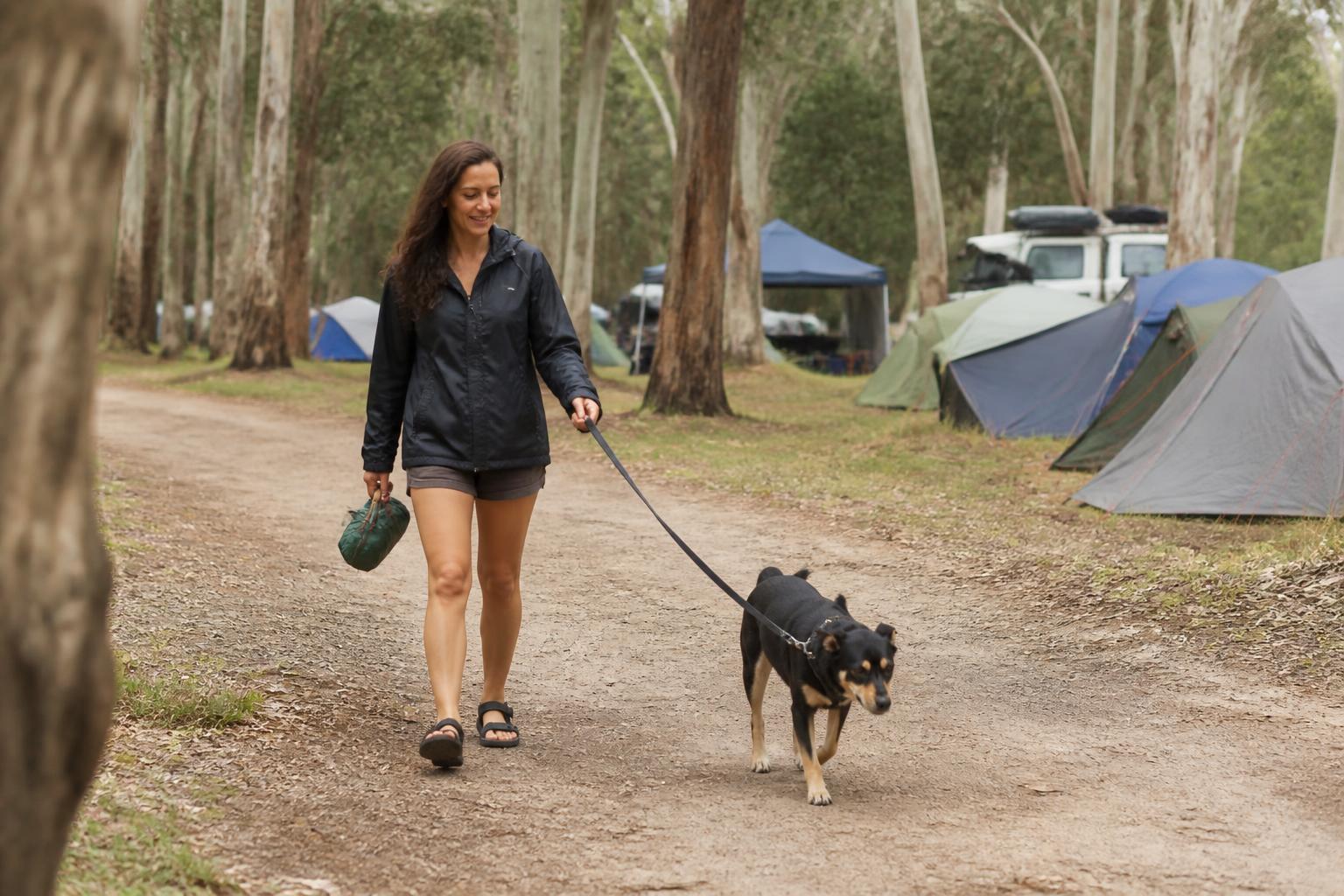
  • Leash up around other campers, kids and wildlife
  • Pick up after your dog every single time, immediately
  • Don't let a barking dog become the campground's alarm clock
  • Bring a mat or bed so the dog has its own 'place' to settle
  • Never let your dog rush up to greet others — many camp dogs are reactive
Step 6

Do a backyard trial run first

Most dogs have never slept outside, and the first time shouldn't be hours from home. Pitch the tent in the backyard and let your dog sleep in it with you for a night or two. They learn the tent is a safe den, you learn whether they settle or bark — and you fix problems where a bad night costs nothing. Treat the backyard run as a proper rehearsal of the whole routine, not just a sleepover: feed them in the tent so it smells like home and 'good things happen here', clip them onto the tie-out lead so the gear isn't foreign at camp, and go through your real bedtime sequence so they learn the rhythm. You'll quickly discover the things that would otherwise blindside you at a remote site — whether they bolt at every possum, whether they can settle without you right next to them, whether they'll actually toilet on lead. If the backyard night is a disaster, that's invaluable information: it means a few more practice nights, or a different plan, rather than a ruined trip and a sleepless campground three hours from home. A dog that's nailed the backyard tent is a dog that's genuinely ready for the bush.

  • A backyard tent night shows how your dog copes before you commit
  • Feed them in the tent beforehand so it smells safe and familiar
  • Practise the tie-out lead at home so it's not new at camp
  • Run your full bedtime routine so the rhythm is familiar at camp
Insider Tips You Won't Find In A Search

Little things that make a big difference

1

Pack a towel and a separate dog mat at the tent door. Wet, sandy paws on your sleeping gear gets old fast.

2

Freeze a few water bottles before you leave — they keep the esky cold, then become cool drinking water and a cooling pad for the dog.

3

A familiar-smelling blanket from home settles an anxious dog faster than anything else. Don't wash it before the trip.

4

Reflective collar or a clip-on LED light makes your dog visible around camp after dark — and easy to spot if it bolts.

5

Bring a long tie-out lead and a corkscrew ground stake. It gives the dog freedom to move while keeping them safe and you welcome with other campers.

6

Photograph your dog before you leave and keep your phone number on the collar — finding a lost dog in the bush is far easier with a recent photo to show people.

7

Bring your dog's normal food and stick to the routine — a new diet plus new surroundings is a recipe for an upset stomach in the tent.

8

Check paws each evening for grass seeds and cuts. Seeds burrow in fast and a limping dog can end a trip early.

9

A wrung-out wet towel laid over the dog cools it faster than almost anything on a scorching afternoon — far safer than letting it overheat.

10

Scope out the nearest 24-hour vet before you leave and save the number. A dog with a cut pad or a tick on a Sunday evening is stressful enough without frantically searching for help.

The Extras Worth Packing

Beyond the basic checklist

Long tie-out lead + ground stake

Freedom to move without wandering off or annoying neighbours.

Familiar bed or blanket

The single best thing for a calm, quiet first night.

Collapsible water bowl + extra water

Hydration and cooling are critical in the Aussie heat.

LED collar light

Spot your dog instantly around camp after dark.

Tick remover & dog first-aid basics

Bush camping means ticks, grass seeds and cut pads.

Poo bags & a towel

Be the welcome camper, and keep paws off your sleeping gear.

Dog's own food (no diet changes)

Prevents the upset stomach that ruins a tent at 2am.

Spare leash & ground stake

Backups matter — a snapped lead miles from home is no fun.
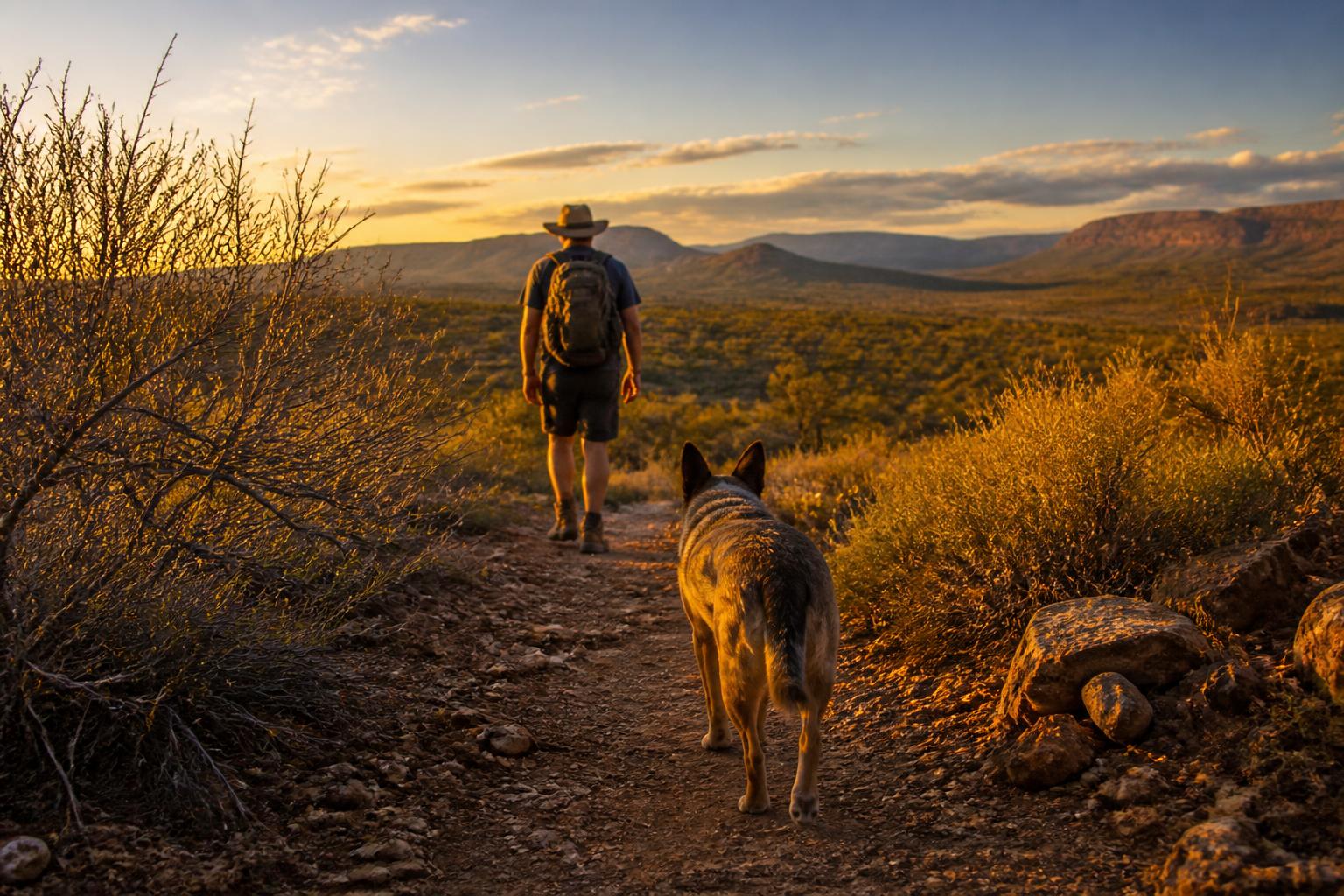
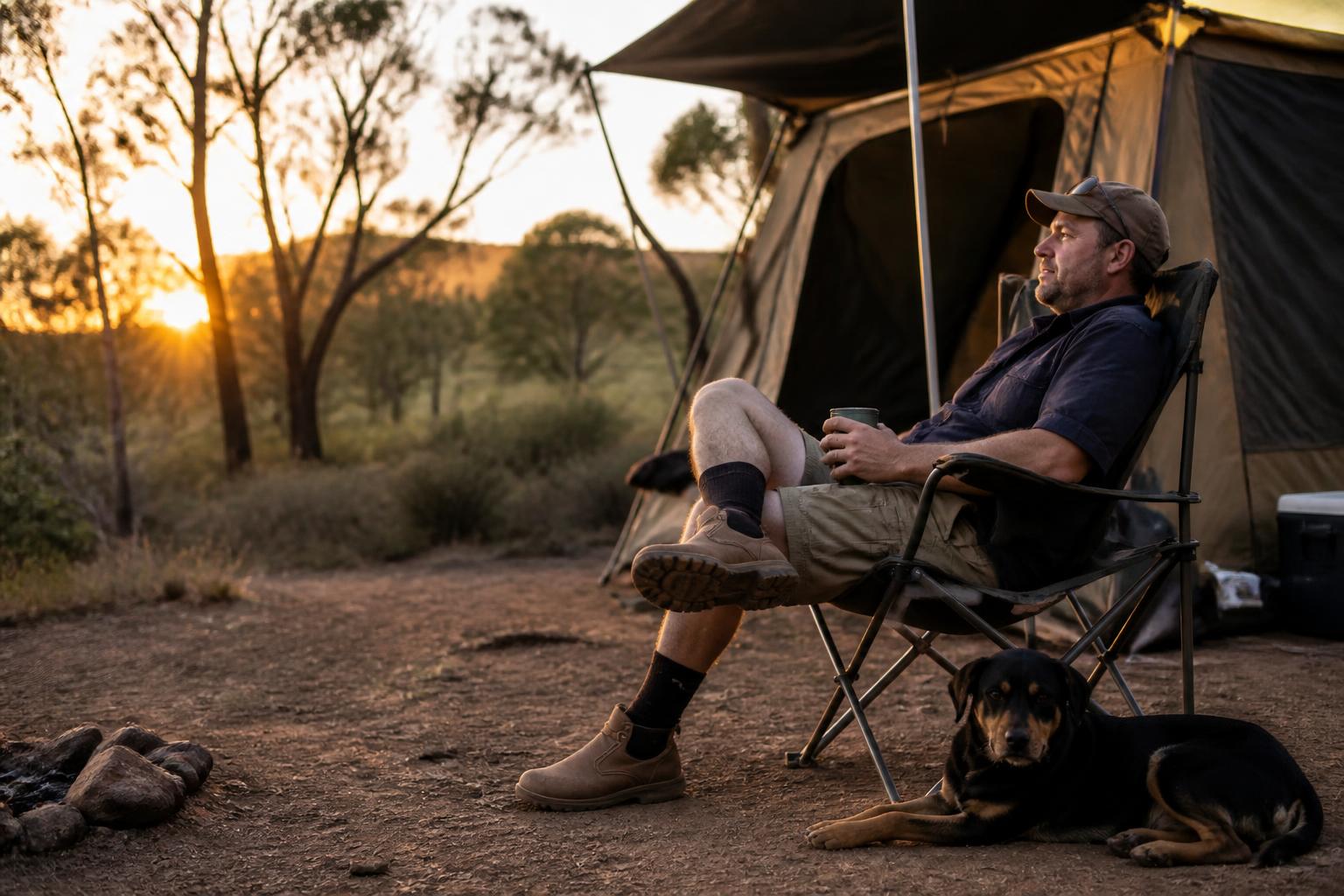
A camper and dog on a bush trail at golden hour

A well-exercised dog is a calm dog — walk hard early, relax easy at camp.

What catches people out

  • Assuming dogs are allowed. National parks are the classic trap — check the specific campground's rules first.
  • Heat. A dog left in a tent or car on a warm day can die quickly. Shade, water and ventilation are not optional.
  • Barking at night. An under-exercised, unsettled dog ruins everyone's sleep — wear them out and keep them close.
  • Snakes, ticks and baits. Keep dogs leashed in bush areas, check for ticks daily, and never let them scavenge unknown bait or food scraps.
  • Forgetting your dog can't tell you it's struggling. Watch for heat stress, sore paws and anxiety before they become emergencies.
  • Letting an excited dog off-lead near wildlife or livestock. In many rural areas a roaming dog near stock can legally be shot — keep them controlled.

Ready to turn this into a plan?

Build a packing list tailored to your trip and step through the rest in the right order.