CAMPING IN SOUTH AUSTRALIA
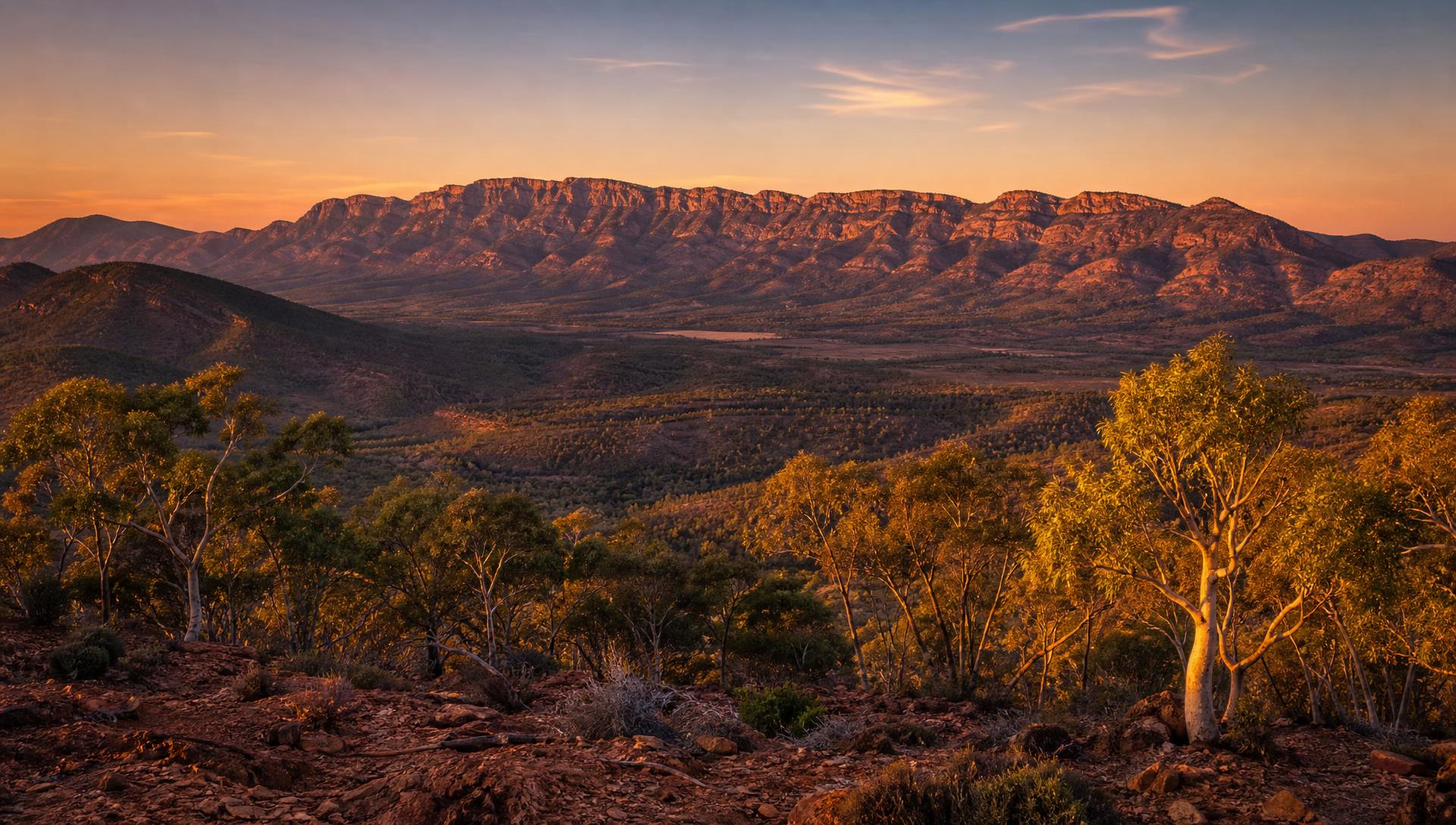
Wild coastline, the Flinders Ranges and the outback — dry, remote and beautiful.
South Australia rewards campers who like space and quiet. From the wineries and beaches near Adelaide to the rugged Flinders Ranges and the start of the outback, much of it is dry and remote — so water, fuel and self-sufficiency matter more here than in the eastern states.
Signature regions
Best seasons: Mar–May and Sep–Nov; winter for the Flinders, avoid peak summer heat inland.
Summers inland are extreme. The shoulder seasons give warm days and comfortable nights almost everywhere, and the outback is best in the cooler months.
Parks, permits & bookings
Managed by: National Parks and Wildlife Service SA (via the Parks SA booking system)
Most SA park campsites are booked and paid for online through the Parks SA system before you arrive, including a vehicle entry fee in many parks.
Permits & passes: Parks SA (bookings, passes, Desert Parks Pass for the far north)
Fire rules & free camping
Fire bans: CFS (SA Country Fire Service) — check Fire Ban Districts and ratings at cfs.sa.gov.au; bans are common over the long, hot summer.
Free camping: Free camps are common in the outback and along quieter coast, but facilities are minimal. Carry all your own water — it's the single biggest planning factor in SA.
Dogs
Dogs are banned from most SA national parks (a few specific parks allow them on-lead). State reserves and private parks vary — always check.
Rules every beginner should know
Carry your own water
Many SA campgrounds have no drinking water. Plan on bringing all of it, and more than you'd think — the climate is dry and hot.
Long fire ban season
Summers are long and hot, and Total Fire Bans by district are frequent. Carry a gas stove and check the CFS daily.
Outback prep for the far north
Heading toward the Flinders or beyond means remote travel — fuel range, recovery gear, and for some areas a Desert Parks Pass.
Local safety & wildlife
Heat and dehydration
Dry heat sneaks up on you. Drink steadily, rest in the heat of the day, and never ration water to 'make it last'.
Remote distances
Help can be hours away. Carry extra fuel and water, tell someone your plan, and consider a PLB or satellite messenger for remote areas.
Snakes and roos at dusk
Snakes are active in the warm months and kangaroos cross roads at dawn and dusk — avoid driving those hours on country roads.
What to pack for South Australia
- Maximum water capacity — jerry cans, not just a small container.
- Strong shade and a hat-and-sunscreen routine for the dry heat.
- For remote trips: extra fuel, a recovery kit and a satellite messenger or PLB.
Beginner-friendly sites in South Australia
We're still adding sites for this state.
Find South Australia campsites